No Mafia Memorial
By Marla Laine Brown:
After five days in Istanbul, it was time to bid farewell and board our two hour flight to Palermo. Initially, we had rented an apartment for our stay in this Italian city. However, at the last minute, we managed to secure a tour that would allow us to explore more of the Sicilian island.
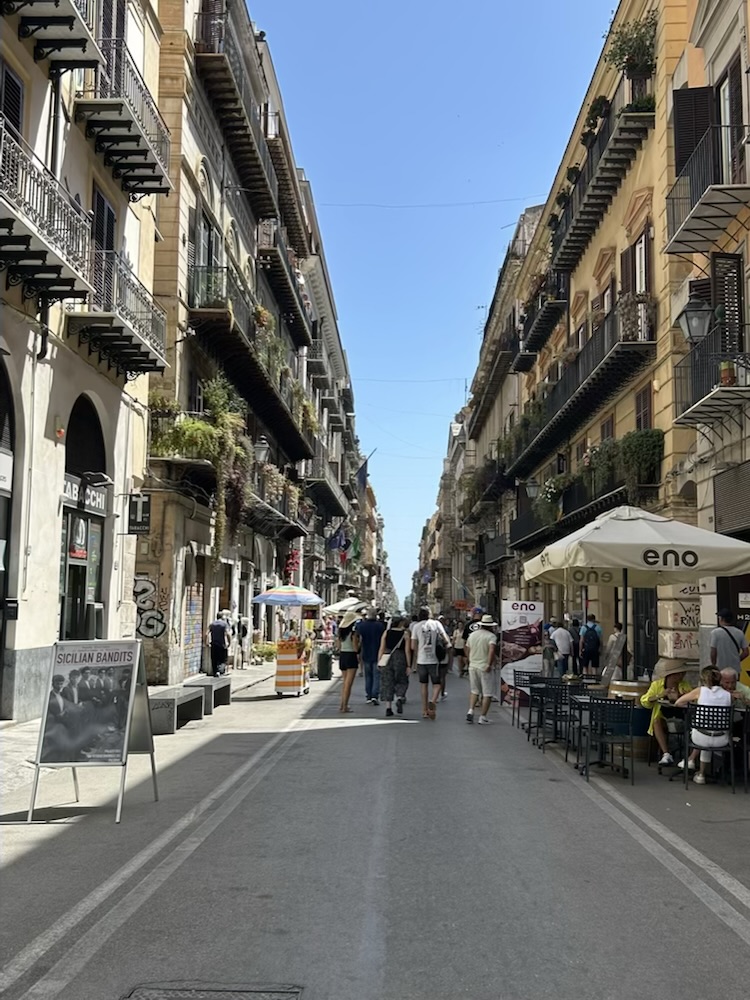
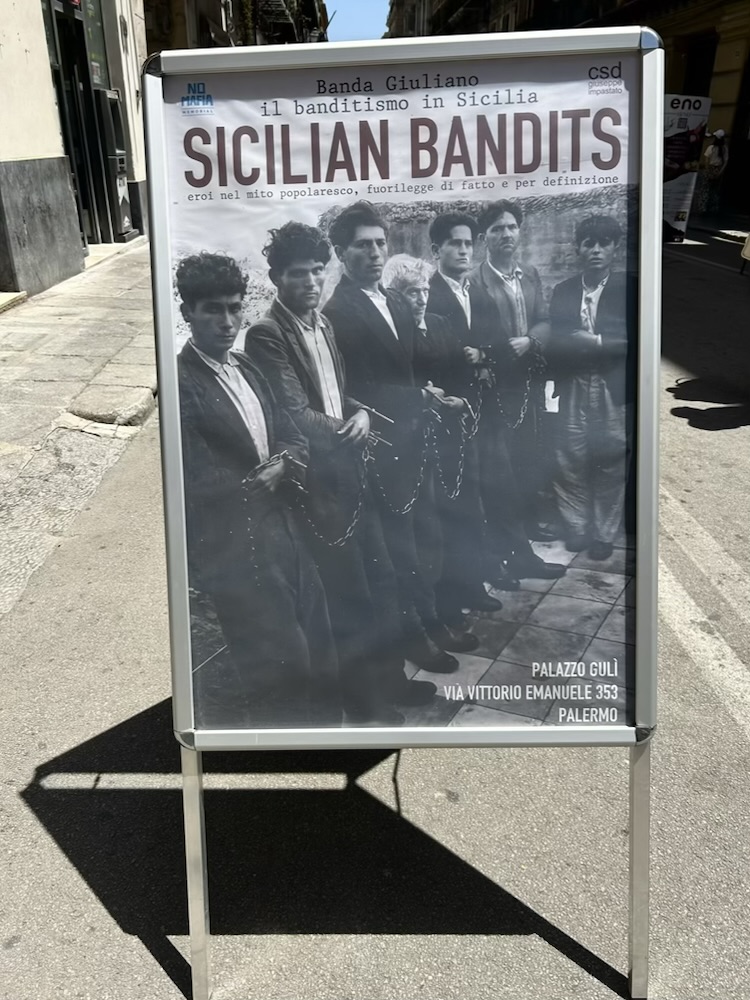
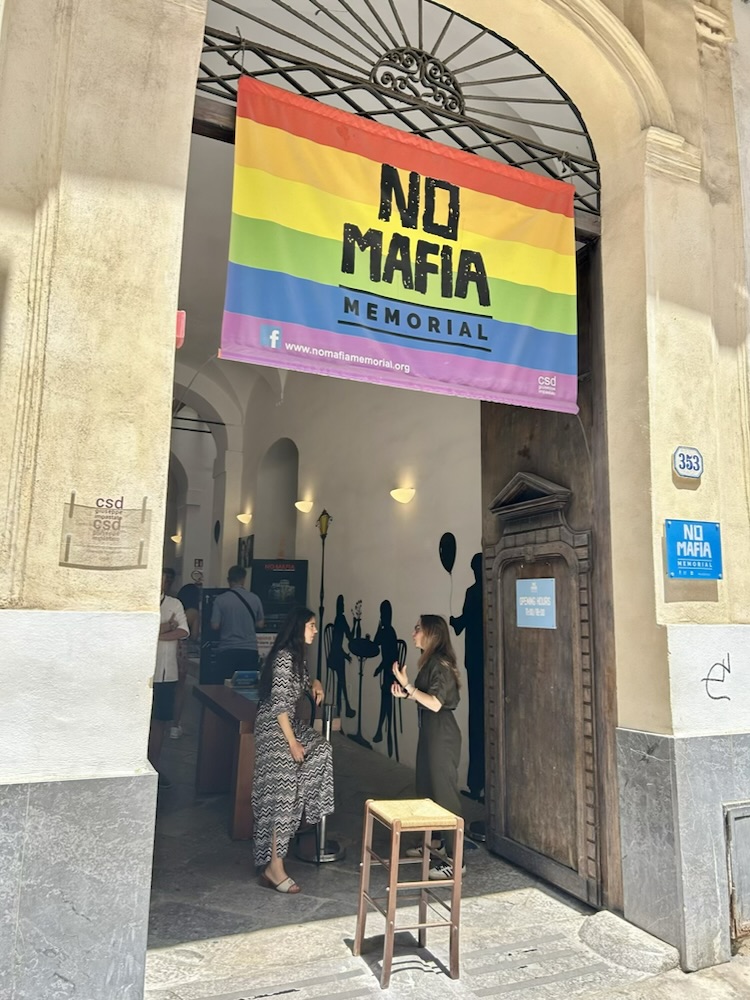
Having a day or so to explore on our own, we headed to the usual tourist attractions of Palermo: the vendors, souvenir shops, and eateries. That’s when we noticed a banner above a space that read “No Mafia Memorial.” Intrigued, we stopped and asked the attendant if this was some kind of mafia museum. She corrected us and explained that it was a memorial for the victims of the Sicilian mafia. “It’s free,” she said, and if you wish to donate after your visit, you’re welcome to do so. With that invitation, we entered what I thought was a small room, but it extended further back than expected and had stairs leading to additional levels.
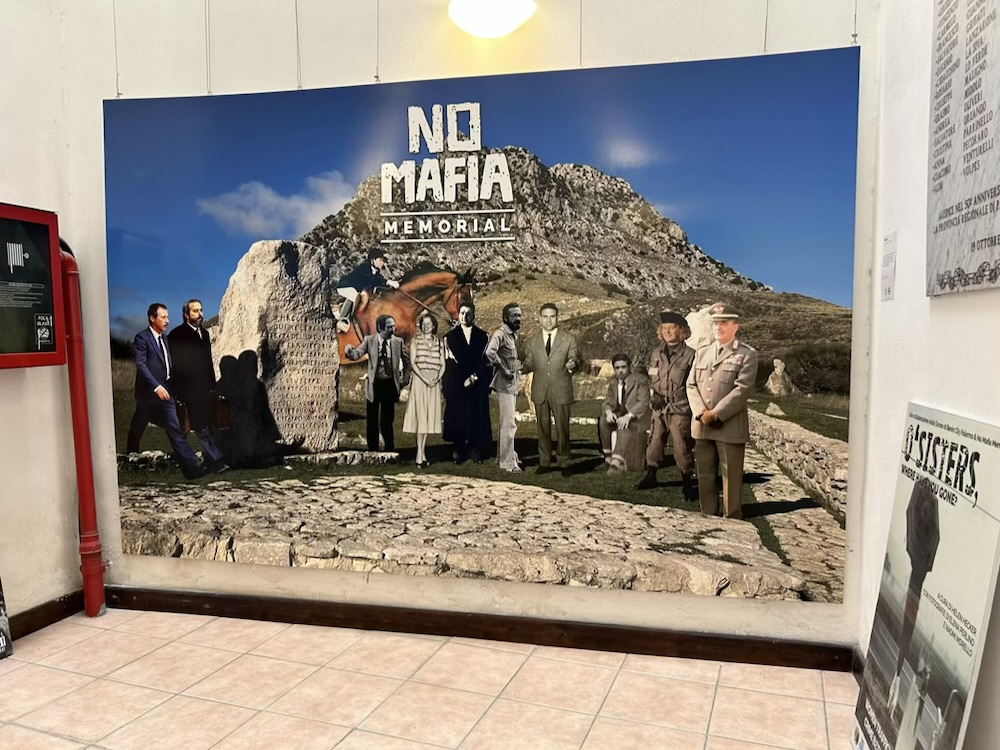
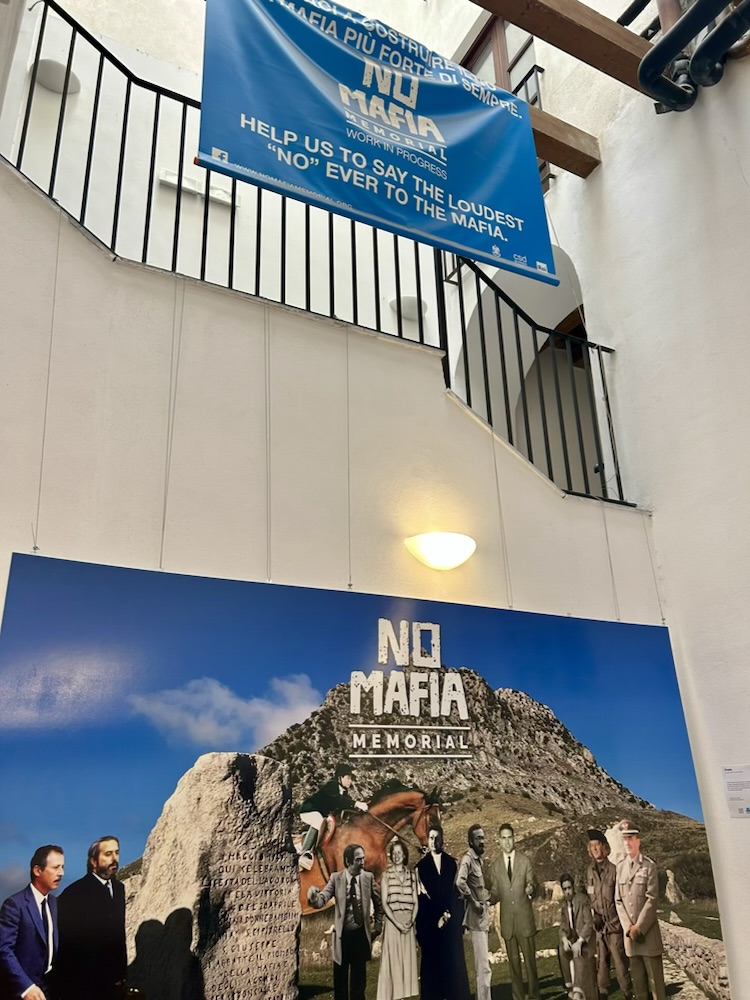
While exploring the ground floor, we came across an array of posters that served as an introduction to the history of the Sicilian mafia. Among these, a prominent poster at the back of the room that featured superimposed images of influential figures. Above it, a banner read, “Help us to say the loudest ‘No’ ever to the Mafia.”
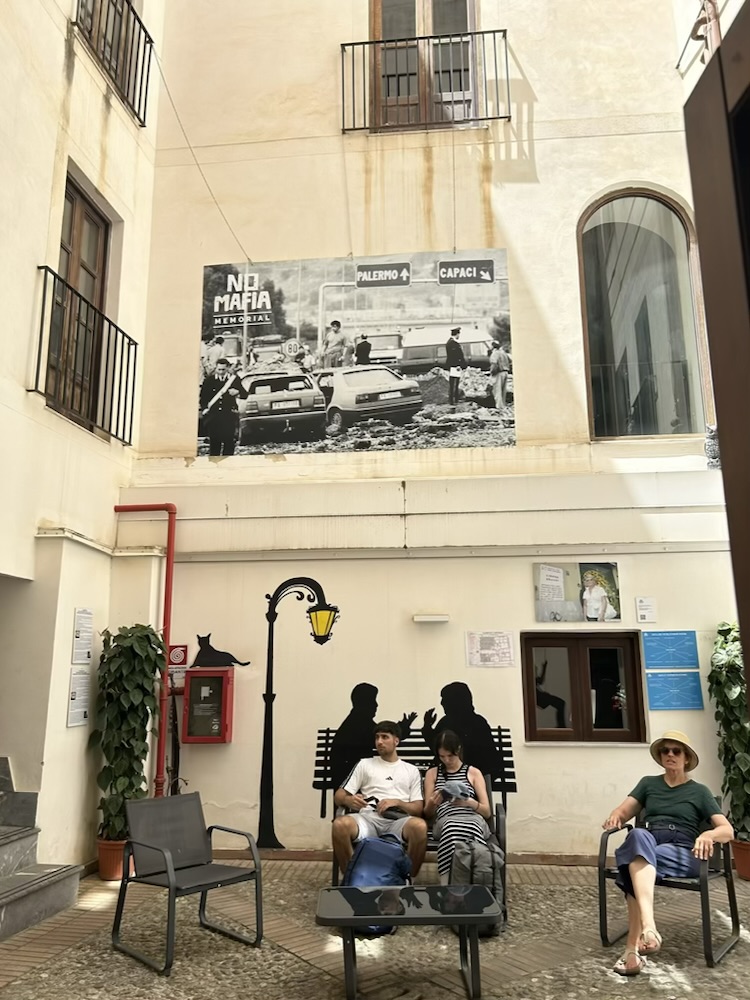
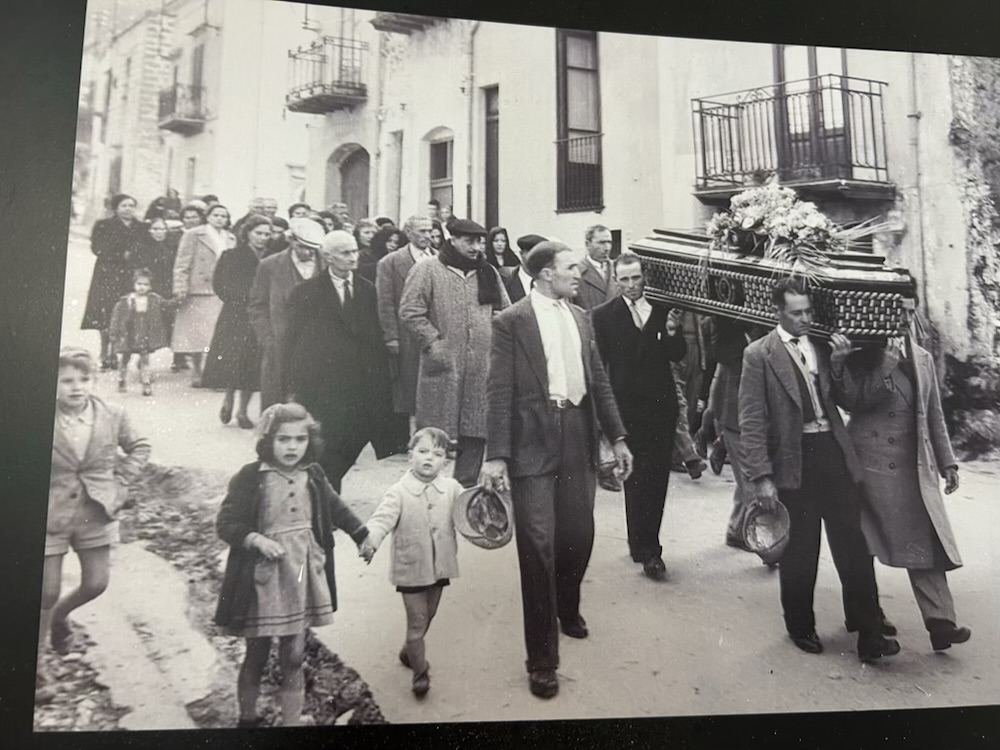
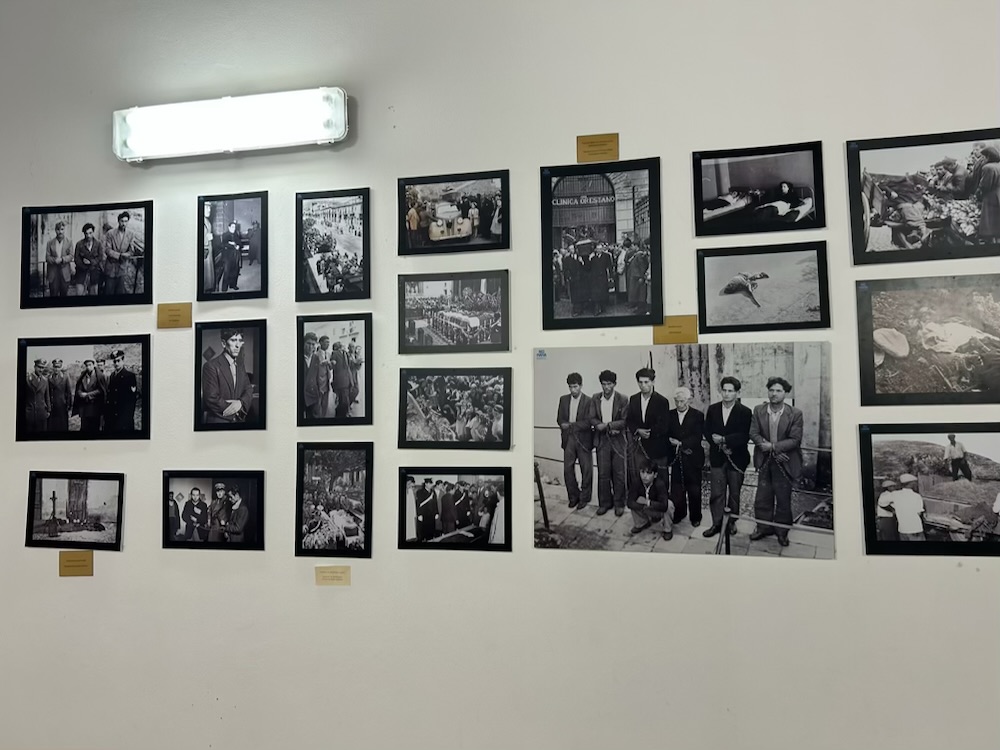
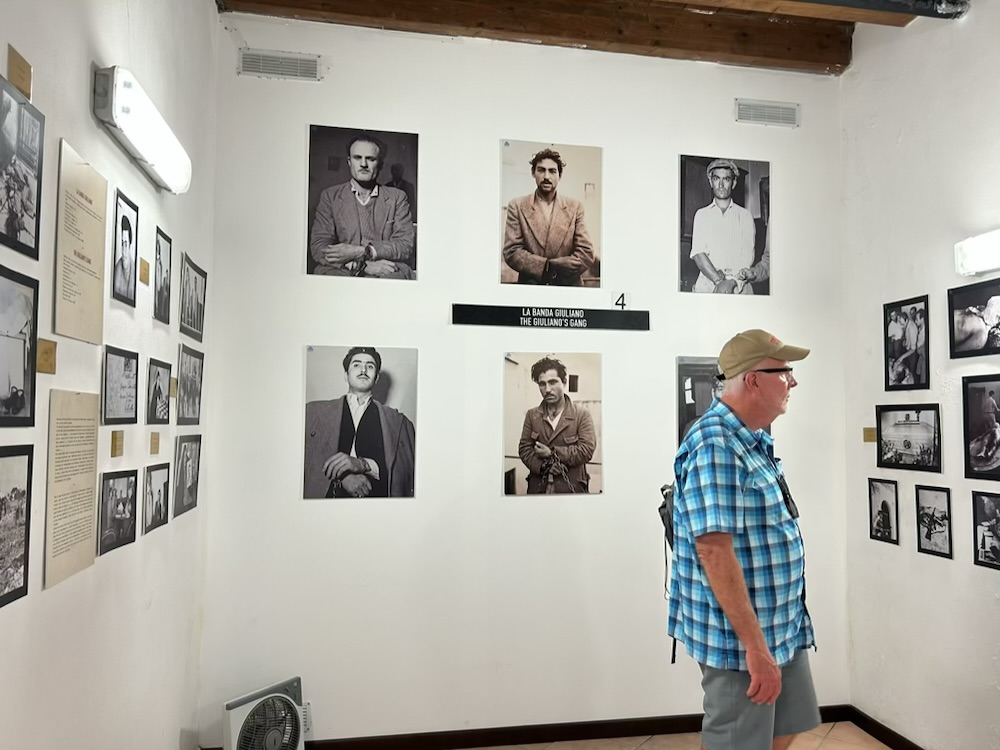
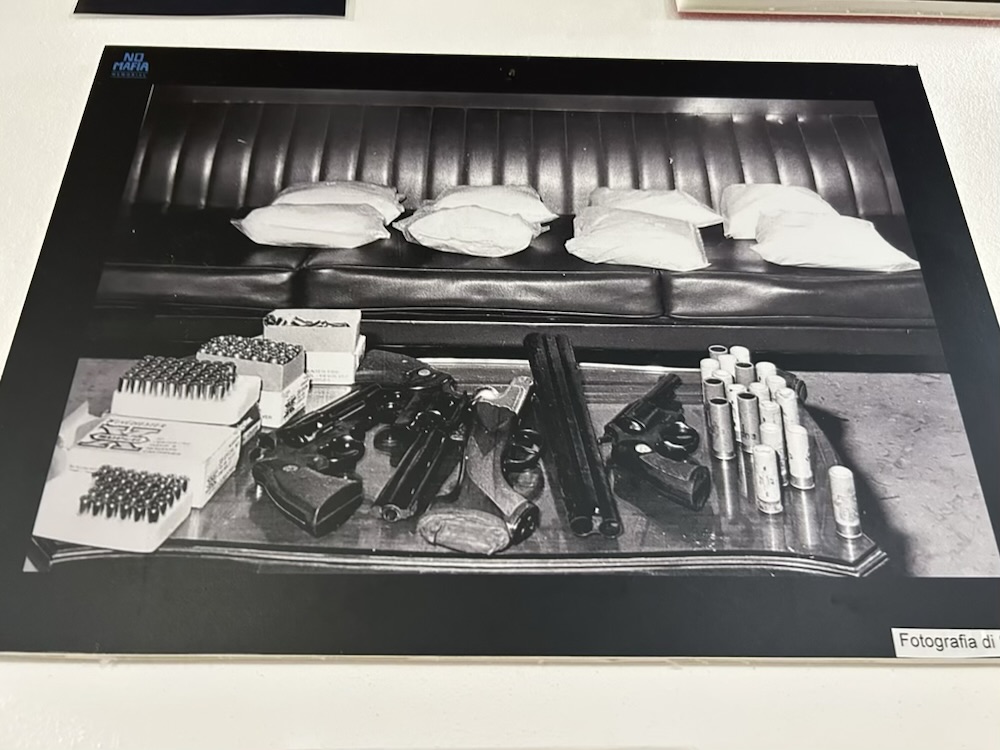
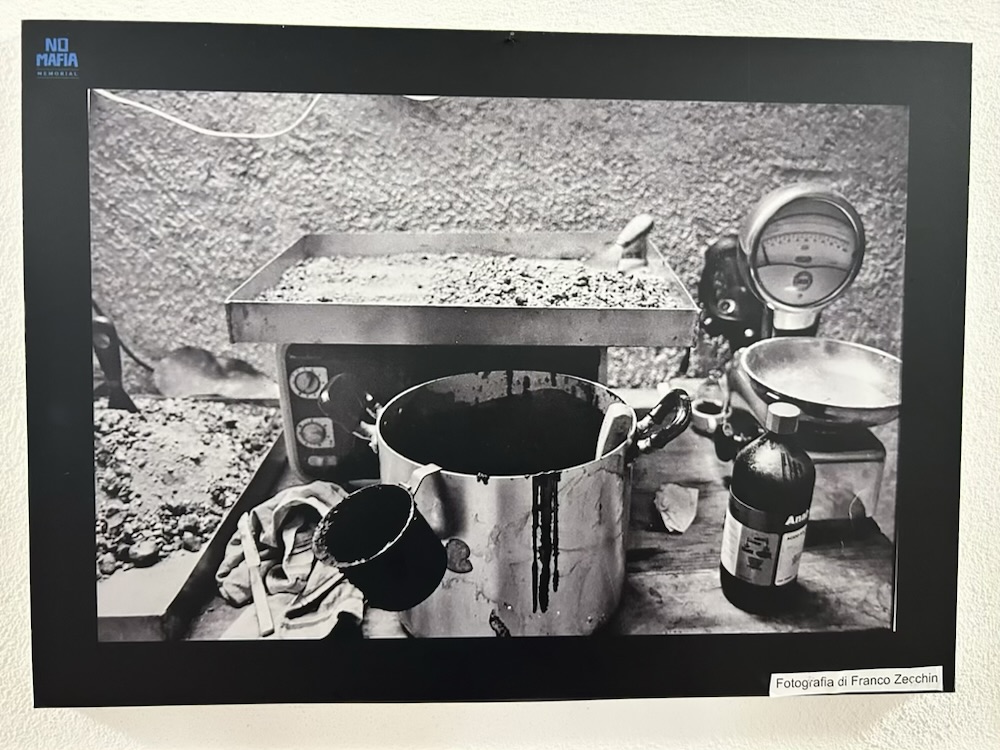
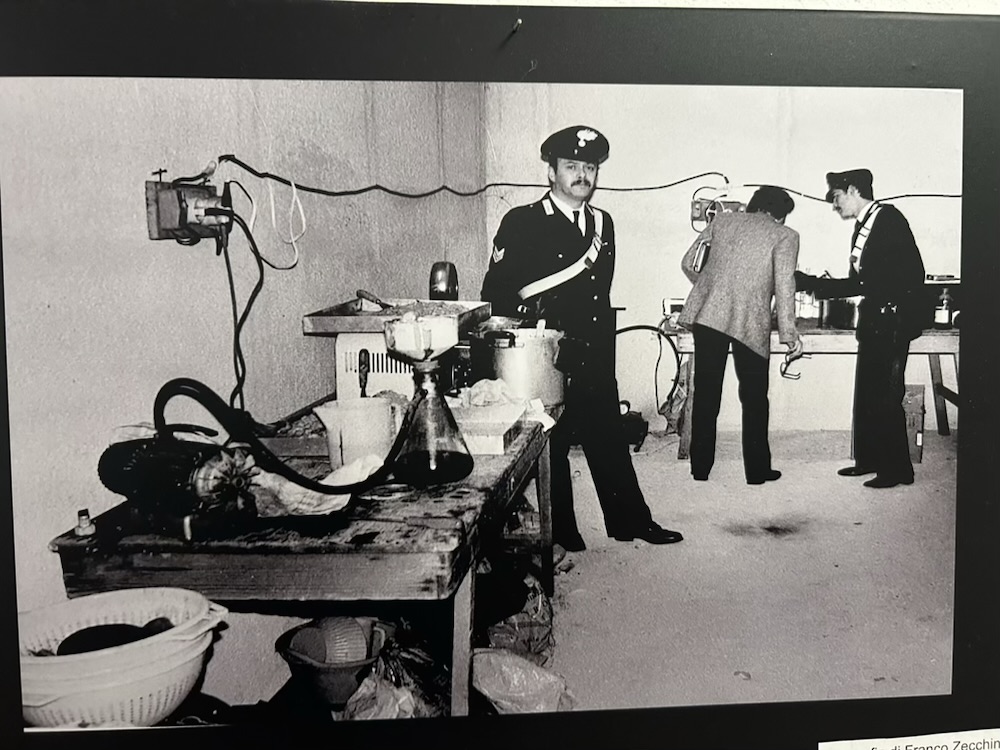
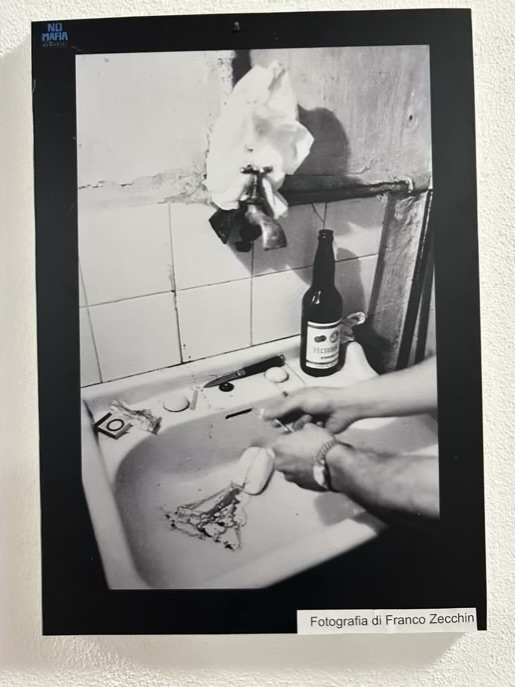
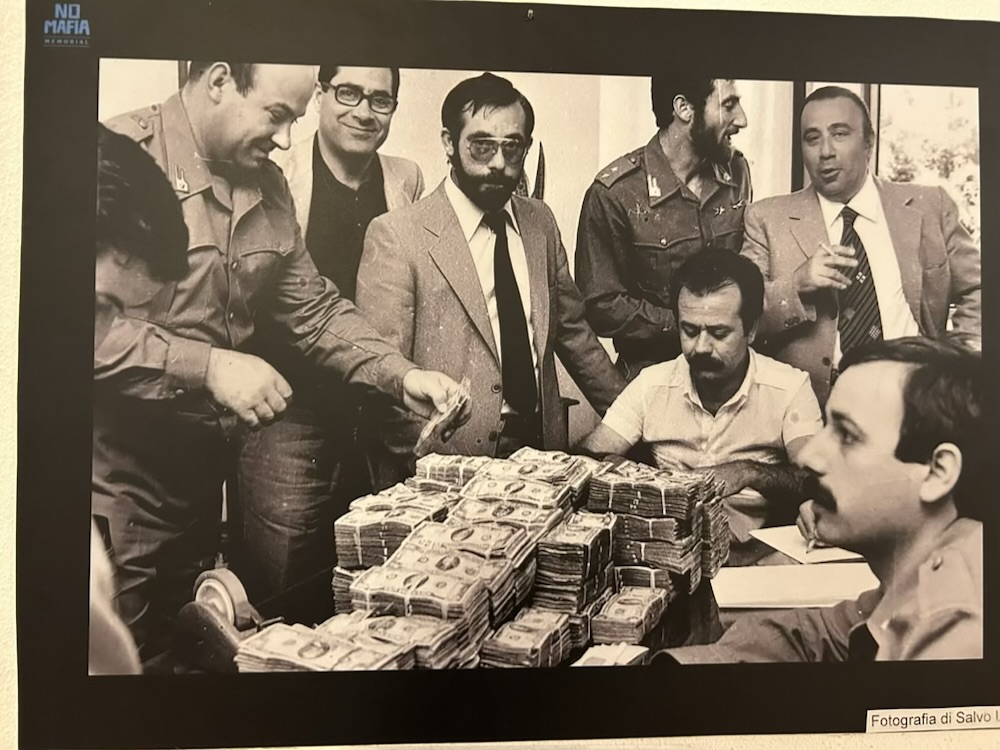
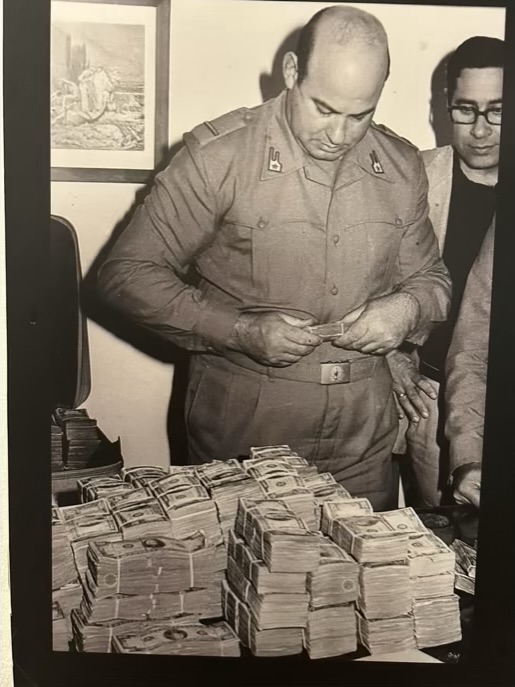
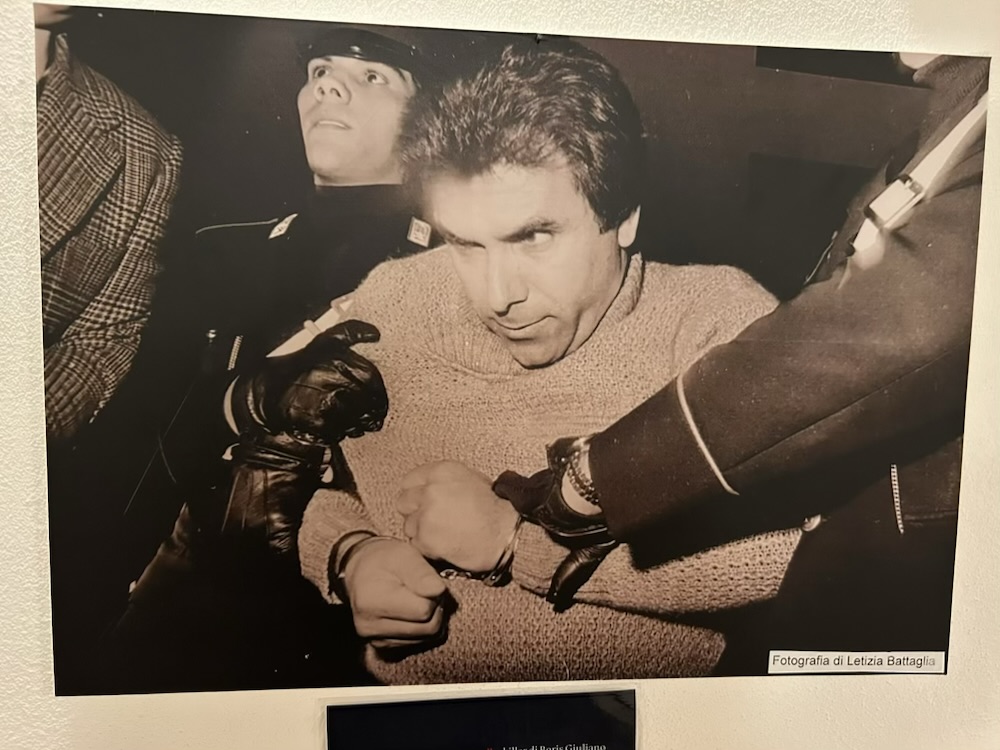
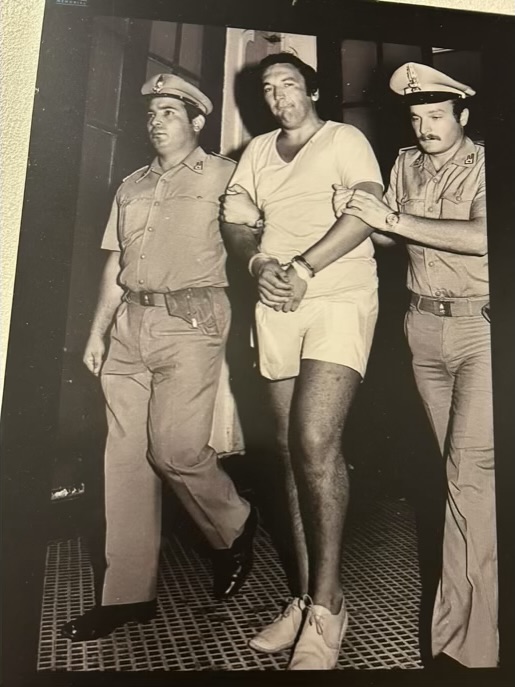
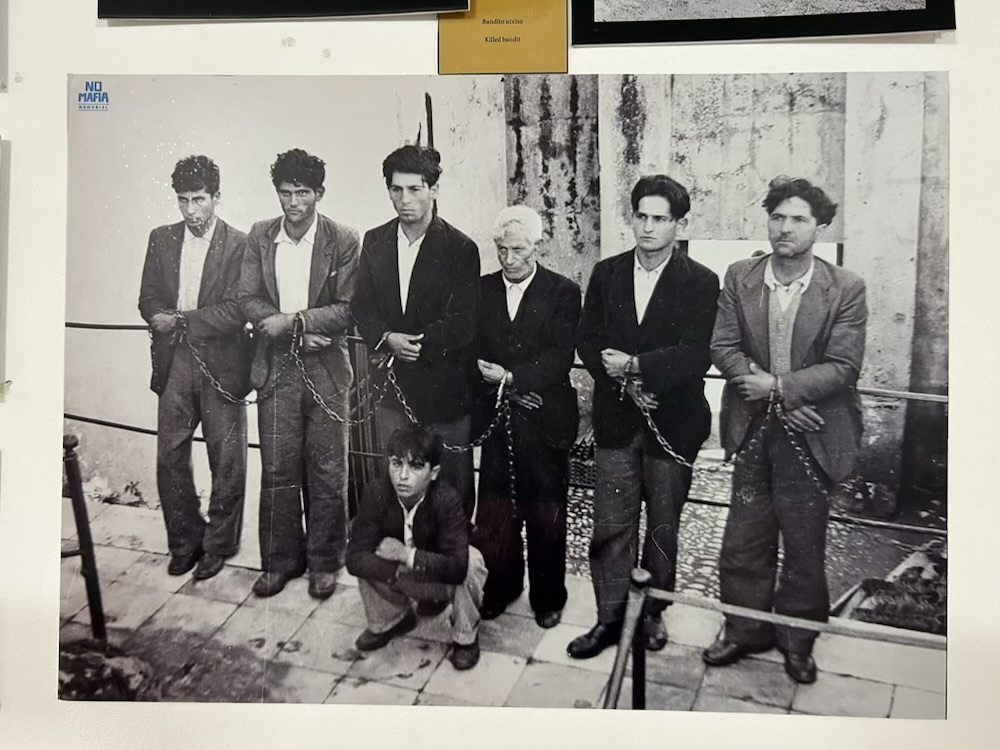
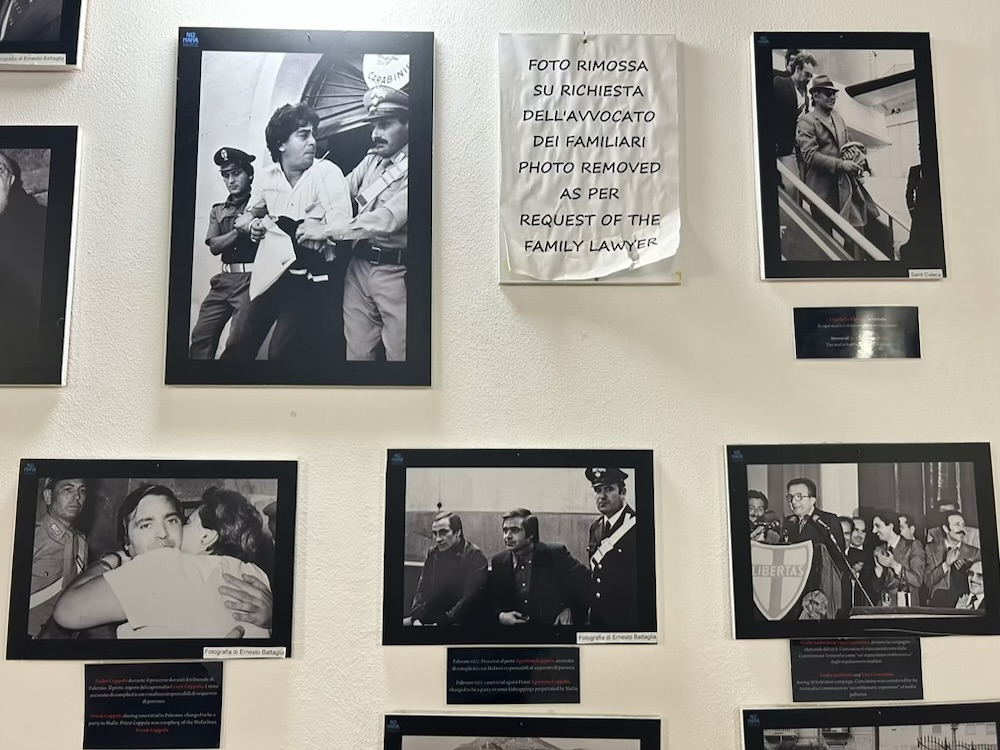

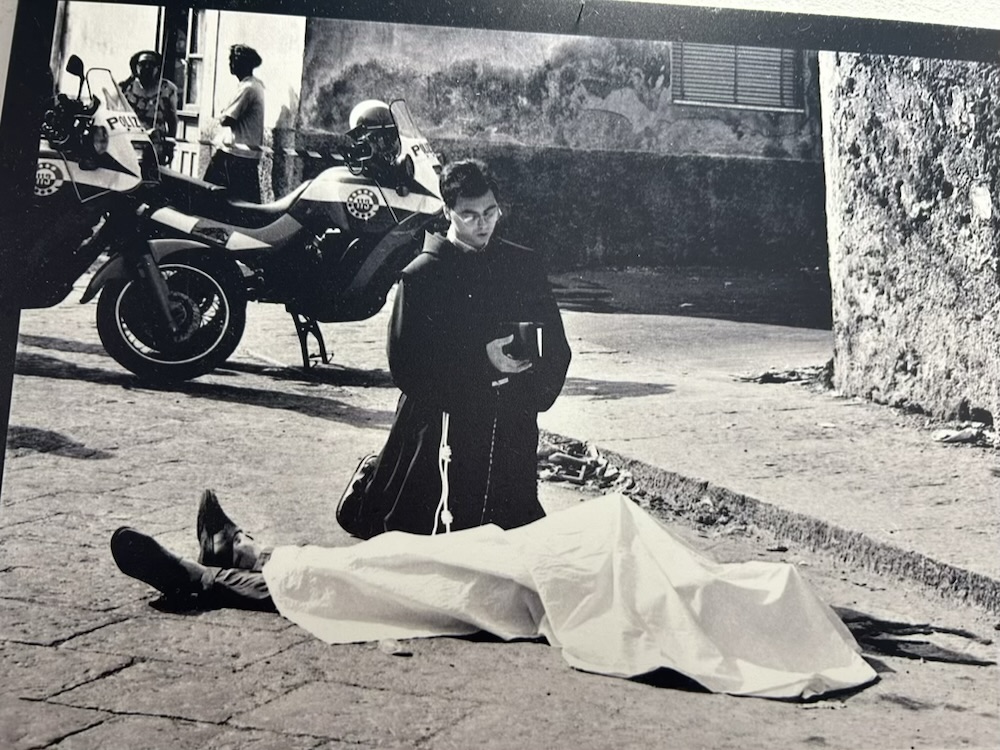
The upper floors housed a small courtyard and several galleries that showcased gruesome photos accompanied by descriptions. While the photos were disturbing, taken directly from the police archives, they provided a stark and graphic portrayal of the victims of the Sicilian mafia. No one was spared their wrath, including journalists who dared to write unflattering stories, noncompliant judges, policemen, and prosecutors. The galleries also featured pictures of confiscated money, drug paraphernalia, and its production, as well as intriguing images of arrested mafia bandits.
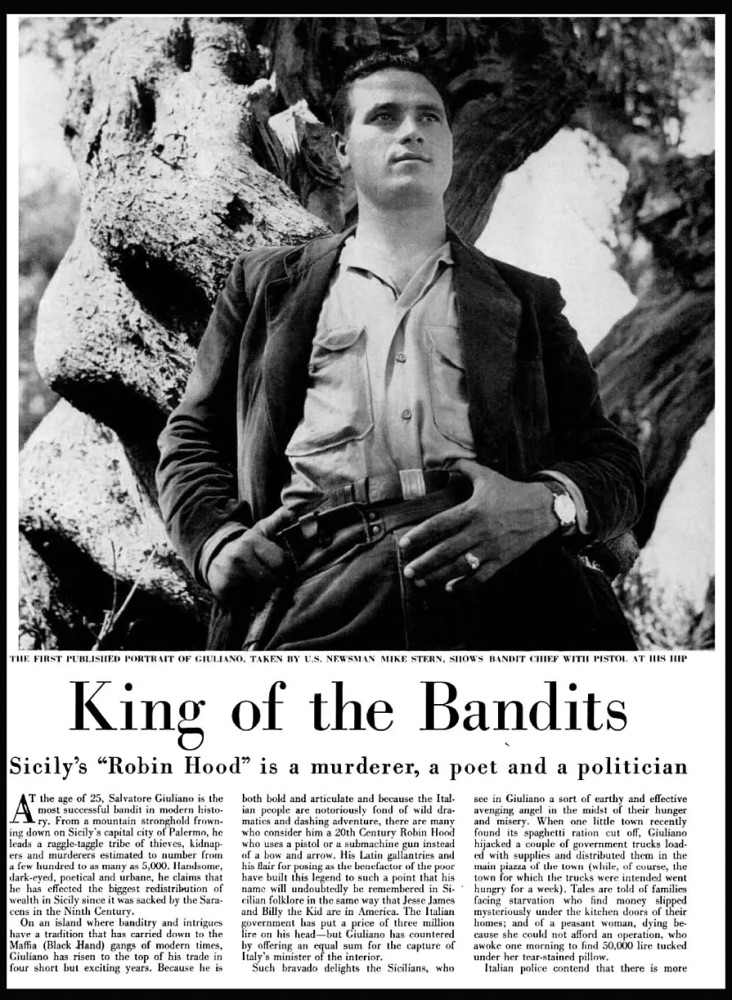
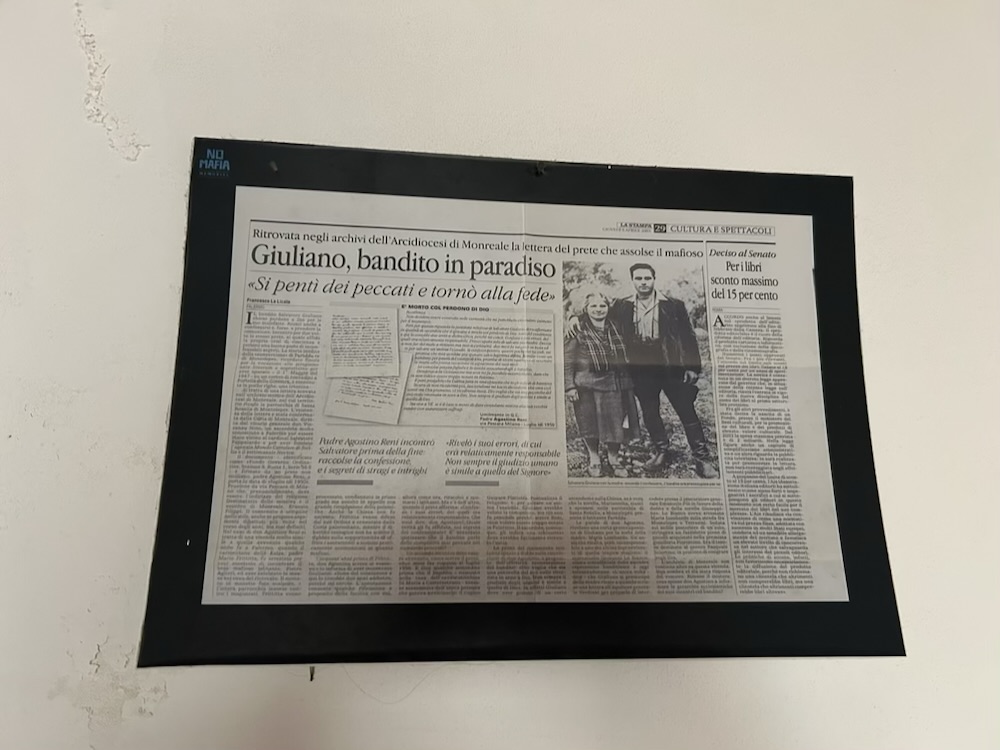
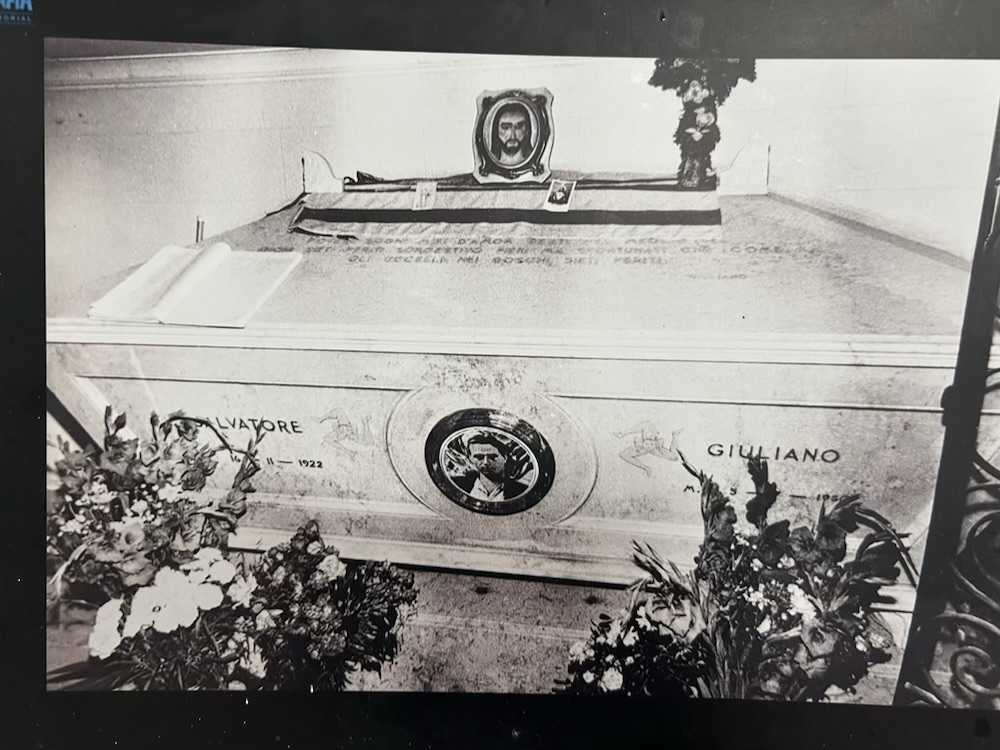
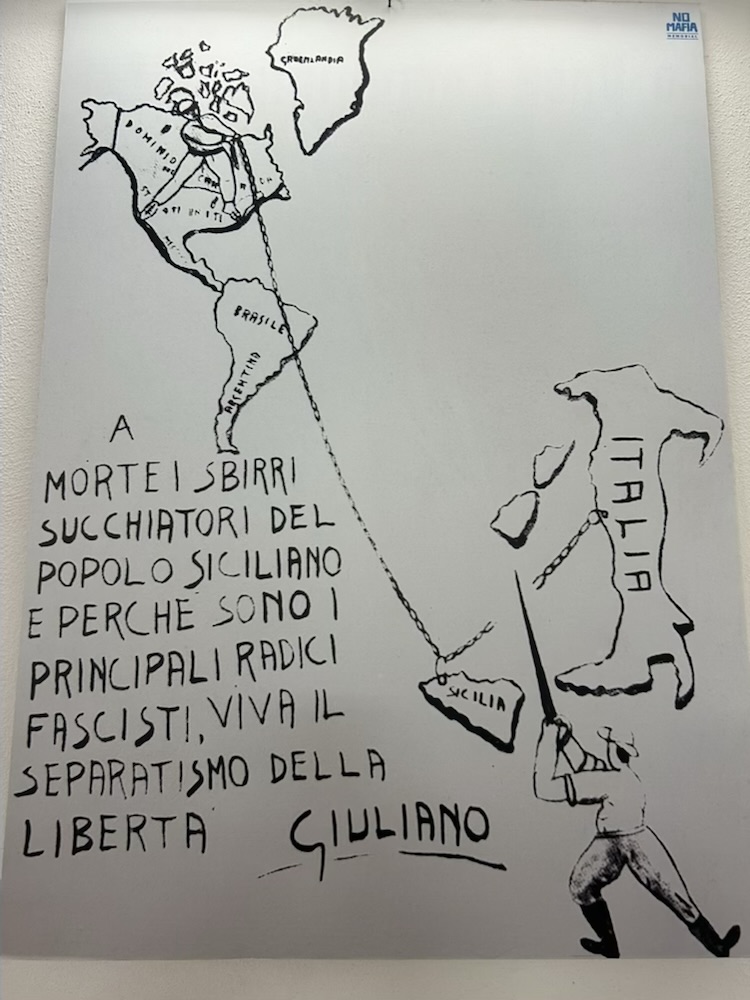
Later, I joined Allan to watch a subtitled documentary about Salvatore Giuliano, the infamous “King of Bandits.” Born in 1922, Giuliano’s outlaw career began during World War II. During this time, he operated a business trading on the black market, providing peasants with affordable food. He also expanded his criminal activities to stealing from the wealthy and giving to the poor, earning him the nickname of Sicily’s Robin Hood. As he recruited men to his gang of bandits, his organization flourished and expanded into other nefarious enterprises. After the Allied invasion of Sicily, he made many enemies, particularly the Italian police forces, more specifically the Carabinieri. His reported involvement in over 87 law enforcement deaths only heightened his popularity, leading him into politics where he unsuccessfully pursued Sicilian Independence. Giuliano was shot to death by a fellow gang member in July 1950. However, it’s worth noting that there are 16 different versions of his demise.
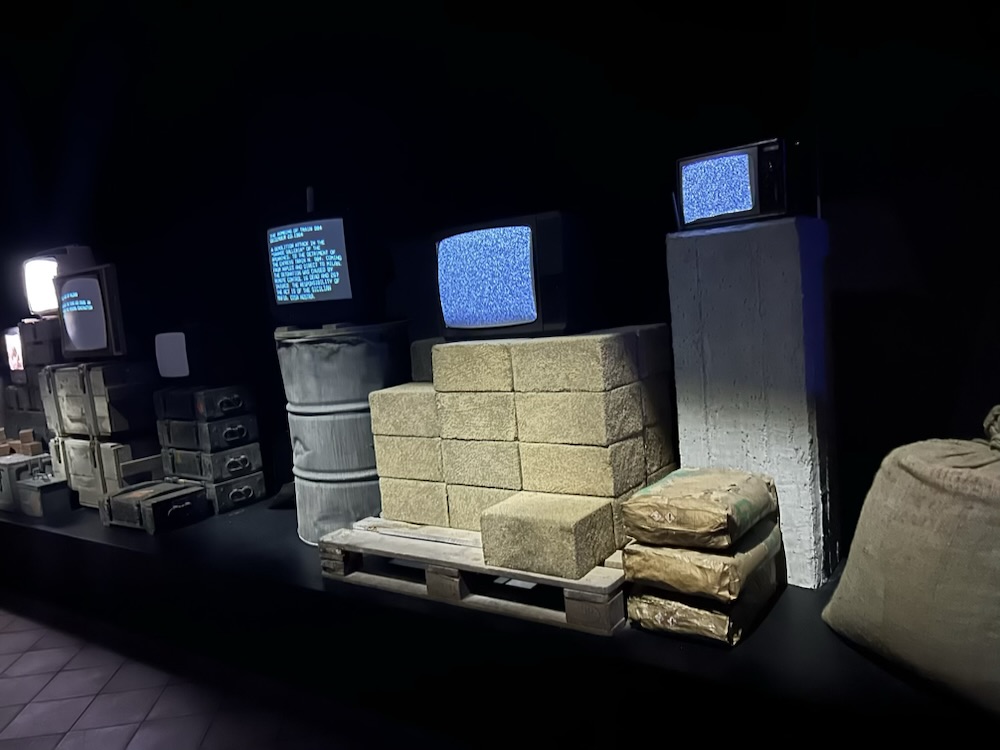
After exploring the memorial a bit more, one of the docents approached us and invited us to stay for a special exhibit. It was scheduled to begin in about 20 minutes and would be presented in English. We agreed and gathered with 10 others on a different set of stairs located on the main floor. Initially, we were unsure of what to expect, but we were led to a small area where we watched a short film and received an explanation from the guide. Initially, we thought that was the end of it, but we were pleasantly surprised to discover that the special exhibit encompassed much more within several rooms. One of these rooms featured an installation covered in old television sets. The presentation began with static on various screens, and at different times, it would intermittently break into old news coverage of the Sicilian mafia, its resultant violence, the drug trade, its impact worldwide, and particularly its drug smuggling operations in the United States.
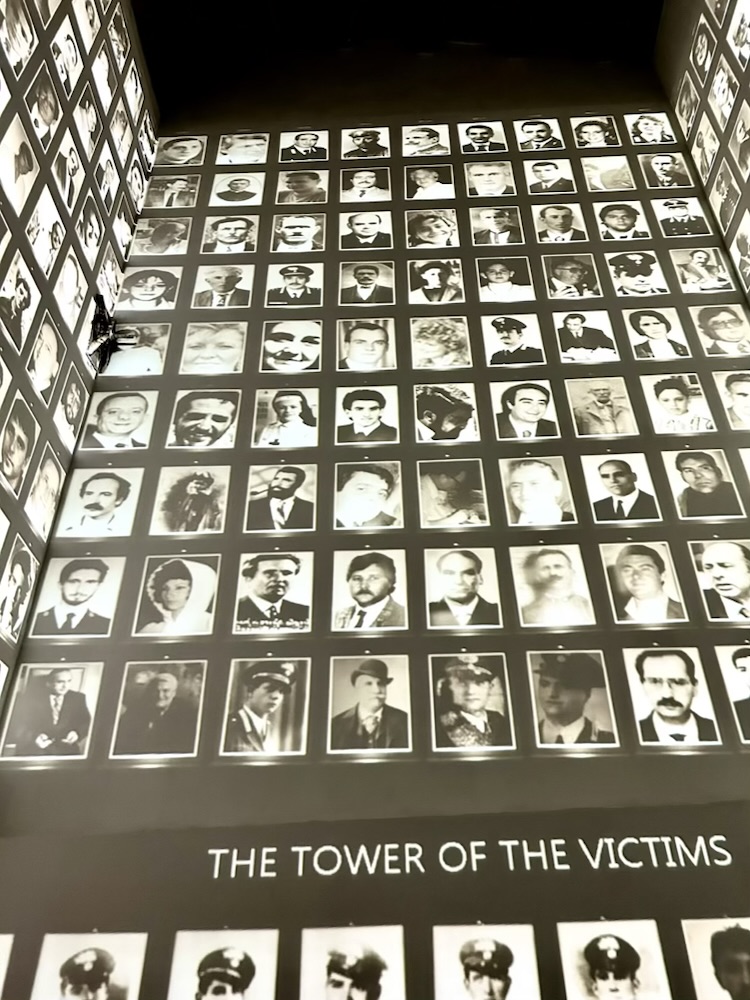
The final exhibit, held in a dimly lit room, featured a towering memorial of photographs projected onto the wall. This solemn display honored the countless ordinary citizens who tragically lost their lives, serving as a powerful conclusion to this informative memorial and a well deserved donation.
 Travel Geeks Blogs
Leave a comment